Transcript:
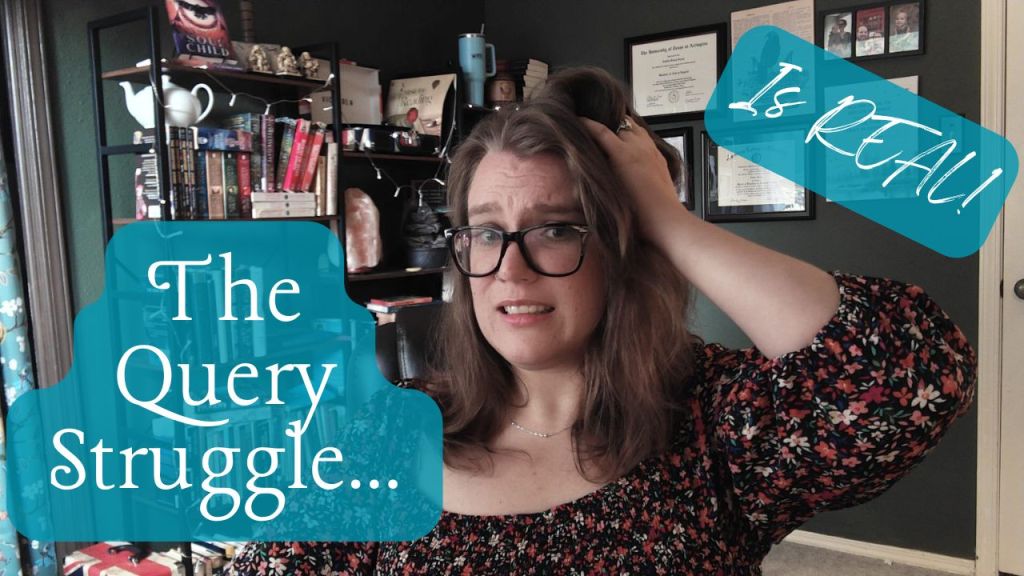
Ah, the query trenches, the deepest darkest pit of despair that a writer will ever face. A time of mental anguish with no foreseeable end, and when that long-awaited end does come, will it change your life and writing career for the better or crush your soul into a fine pile of dust?
The last third of my training for my Book Coach Certification program was all about query letters, synopses, and finding and querying agents. So I thought in the spirit of Mental Health Awareness Month, I would take some of what I learned from this and provide some advice and hope for surviving this time to protect your mind from the struggle.
Hi, I’m C. Sloan Lewis, your virtual writing coach, and my goal is to help you not just improve your writing, but to support you as a writer. Welcome to my channel!
What are the Query Trenches?
As a former history teacher who taught many a lesson about WWI, I’ve always thought that the word “trenches” was a little extreme. But after working with many writers in the middle of this process, I’m now far more sympathetic to the comparison.
For anyone who might not be aware, the “query trenches” is a term for the time between submitting a query for a book or another writing project to an agent or editor and waiting to hear back (if you hear back at all). After some research, I couldn’t find who coined the term or what its original meaning was —if you know, please tell me in the comments— but I have a pretty good idea of why it caught on and stuck.
Just like the soldier shipping out, you start this process full of hope for glory. You’re filled with the anticipation of what might end up being your finest hour —seriously, those poor lads had been convinced they were in for a grand ol’ time through propaganda.
But then, uh oh, you find yourself in a desolate and hostile environment, forced to hide in a hole lest you get your head blown off. You’re sitting in disgusting mud, rain pouring down on you —or in the case of writers, sitting alone in your writing space filled with existential dread.
Some of your fellow soldiers die, others become heroes, and some run out the clock and go home. Who will you be? Will you become a published novelist? Will you get countless rejections and your book never see the light of day? Or will you give up in the middle, unable to take the anguish any longer?
Okay, so maybe the query trenches aren’t quite that dramatic, at least for most, but let’s be real: agents and editors are RUTHLESS. You will get rejected a lot —so many great writers have— you’ll probably be ghosted twice as much, and it’s quite possible that your book won’t get published.
But that doesn’t mean you shouldn’t try your hardest, and I want to help you be kind to your mental health while you do.
Why Addressing Mental Health Matters During the Query Process
From what I have witness as a writing coach, a friend, and critique partner to many writers, I strongly believe that the querying process is the most damaging to a writer’s mental health. And it makes sense.
Our creative works are so personal, and putting them out into the world forces us to be more vulnerable than we ever have been before. These aren’t just our friends, critique partners, and beta readers accessing our novels; these are industry professionals, the gatekeepers who decide whose work will be traditionally published. This is a dream that so many writers have had since they could only string a few sentences together.
After a month or two goes by after submitting queries for their books, I have seen writers time and time again let imposter syndrome and self-doubt creep in. Then, they’ll try to overcompensate, overwork themselves, and burn out… It’s a dangerous spiral to get caught up in.
Then, when the rejections start rolling in… which they tend to do… I’ve seen writers consider giving up writing entirely. It can be so heartbreaking to witness.
But you need to understand that long gaps of time between submission and responses are just part of the process. Agents get dozens, if not hundreds, of submissions at a time to go through and carefully consider. Then, they can only take on a certain number of books at a time.
Agents have to be super picky because it’s their job and the success of the books they agent have a direct effect on their career trajectory. But that’s not to say it doesn’t feel absolutely brutal when you get rejected.
Mental Health Tips for the Query Trenches
So, let’s talk about the ways we can be kind to our mental health during the querying process and come out on the other side of it (mostly) unscathed.
- Set Realistic Expectations
Querying is a long game, not a weekend project. It can take months or even years to find the right agent, or to realize you’re ready to pivot to a different path. According to data compiled by QueryTracker.net, the request rate for full or partial manuscripts hovers between 1% and 5%. That means for every hundred queries you send, maybe one to five agents will ask to see more.
This is normal. It doesn’t mean your book is bad—it means the odds are tough, and the industry is subjective.
A great quote to help you with this is from Susan Dennard, who said, “You can’t control who says yes—but you can control your craft, your mindset, and your persistence.”
Keeping this in mind will help you to understand that rejection is not about you, the author, or even the manuscript you submitted. It could simply be wrong place, wrong person, wrong time, wrong market.
- Create Boundaries for Your Querying Time
The temptation to check your inbox constantly is real. Every notification ping feels like it could be the email. But this is a recipe for burnout and anxiety.
Sometimes I see that writers who have sent out a good number of queries haven’t heard back after a few weeks, start to find more and more agents to query, bogging themselves down with work that might not even be necessary.
Instead, set clear boundaries. Maybe you only check your inbox twice a day, or only send queries on Saturdays. Give yourself rules that protect your emotional bandwidth.
Developing “Inbox discipline” can also help shift your mindset from anxious waiting to intentional action. I’m dealing with the very same thing as I wait to hear back from my certification program to see if I passed, only checking once a day. It’s tough.
- Don’t Personalize Rejection
I mentioned this briefly already, but this is probably the most important of the tips to keep in mind.
Most rejections are form responses. They’ll say things like “not the right fit” or “I just didn’t connect.” And while it’s easy to internalize those as “I’m not good enough,” that’s not what they mean.
In her memoir Bird by Bird, Anne Lamott writes:
“You are going to have to give and give and give, or there’s no reason for you to be writing. And you have to finish things—because that’s the only way you grow as a writer.”
Every rejection is part of your growth, not a judgment on your worth. Remember that even J.K. Rowling was rejected 12 times before Harry Potter was picked up. Kathryn Stockett’s The Help? 60 rejections. Chicken Soup for the Soul, probably the most famous book series of all times, was originally rejected 147 times.
Again, it doesn’t mean you or the book isn’t cut out for publishing. There are sooooo many factors that go into the process of an agent picking a book.
- Find Community Support
Writing can feel isolating, but querying can feel downright lonely. This is when community matters most. The writing workshop I’m a member of gives time and space for people to share when they have sent in a submission, been accepted, and also been rejected. We clap for all three because you can’t get rejected if you don’t put yourself out there.
I would highly recommend joining an in-person group like the workshop I attend, but you can also look for online spaces like:
- Social Media’s #WritingCommunity
- Discord groups for writers
- Facebook groups
Surrounding yourself with people who understand the struggle helps you feel less alone and more empowered.
- Stay Connected to the Joy of Writing
Querying is one part of your writing life; don’t let it become the whole story.
Start a new project—something fun, messy, or totally different. Return to a shelved idea. Journal. Try a short story. Write fanfic. Whatever sparks your joy again.
This process is full of waiting, so make sure that time is filled with creativity, not just refresh buttons.
Henry Miller said, “Writing is its own reward,” and I too often see writers forget that in the query process.
Your story still matters, even if the industry hasn’t said “yes” yet. Keep writing. Keep dreaming. The publishing world is slow, but your voice is already valuable.
Reframing Success
I think it is important to close this video by acknowledging that success isn’t only an agent or a book deal. Don’t wait until you’re done with the race to celebrate all the progress you’ve made along the way. Small wins like finishing a draft, writing your query letter, and even getting a personalization rejection letter are all things to feel good about. It means you’re doing it, you’re pursuing that lifelong dream.
Outro
But that’s all I’ve got to say about this topic for today. What’s been the hardest part of querying for you? Let’s talk about it in the comments. And if you’re in the trenches right now — I’m rooting for you!
Be sure to give a thumbs up if you enjoyed this video and got something out of it, and subscribe for more videos to support you in your writing journey.
That’s all for me today and you’ve got some writing to do, so I’ll see you in the next video. Ta-ta!
 C. Sloan Lewis | Your Virtual Writing Coach
Leave a comment